
Reviewed · FLORENCE FOOD TOURS
Florence’s Ultimate Food Tour: Full Tuscan Meal by Do Eat Better
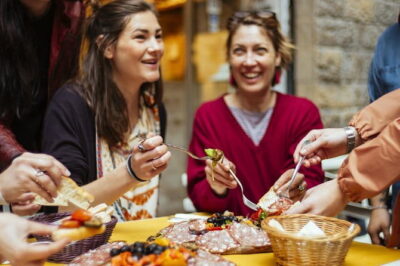
Florence’s food traditions make the most sense at the table. This 3.5-hour walk serves up a full meal in stages, with Tuscan meats and cheese, pasta, bread soup, schiacciata, and a sweet finish, while your guide connects the dishes to the streets and stories around you.
I like that the route pairs five different food stops with an easy introduction to the historic center, and that the guide covers both local cooking and Florence’s past. I also like the generous portions: plan for a proper meal, not a few polite samples.
One consideration: the group can include up to 12 people, and some restaurant rooms are tight. You’ll also want to arrive hungry. The pasta and soup can fill you up well before the final stop.
- Tuscan staples, not just snacks: Taste cured meats and cheese, pasta, pappa al pomodoro or ribollita, stuffed schiacciata, and a seasonal sweet.
- Five stops across the center: The route takes in Via Guelfa, the Palazzo Medici Riccardi area, Piazza Santa Trinita, Via dei Neri, and Ponte Santa Trinita.
- Food and city stories together: Guides such as Gennaro, Marco, and Marie have been praised for explaining local dishes alongside Florence’s politics, customs, and landmarks.
- A filling 3.5-hour outing: The meal is served in stages, with water and at least one alcoholic drink included for adults.
- Small, but not necessarily tiny: The cap is 12 people. That keeps the group limited, though some dining spaces can feel cramped at full capacity.
A full Tuscan meal, one stop at a time
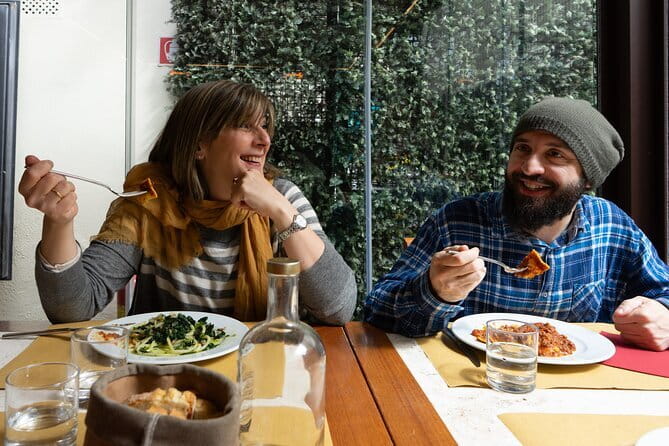
The central idea here is simple and useful: instead of choosing one restaurant and ordering a single course, you walk between several places and sample the foods that define Tuscan home cooking and street food. At the end, you should have eaten about as much as a full meal, spread across at least four stops.
That format makes the tour a good first or second day activity. You get an early look at the city’s food habits, and the route helps you notice parts of central Florence you might otherwise pass without a second glance. Several guides, including Gennaro, Marco, Agota, and Marie, have been singled out for making food and city history work well together. Your guide will depend on the date, so don’t book expecting a particular person.
The pace is designed around eating and walking rather than rushing from landmark to landmark. There are five food stops, with about 45 minutes at each of the first three, then roughly 30 minutes at the final two. The listed tasting time totals a little over three hours; the full tour lasts about three and a half, allowing for the walk between places.
Starting with cured meats and wine on Via Guelfa
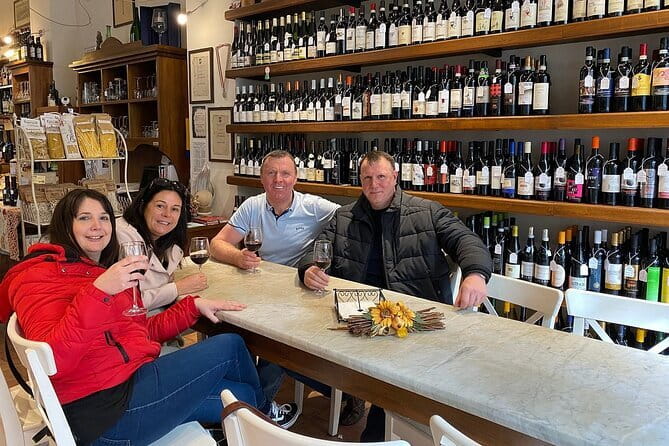
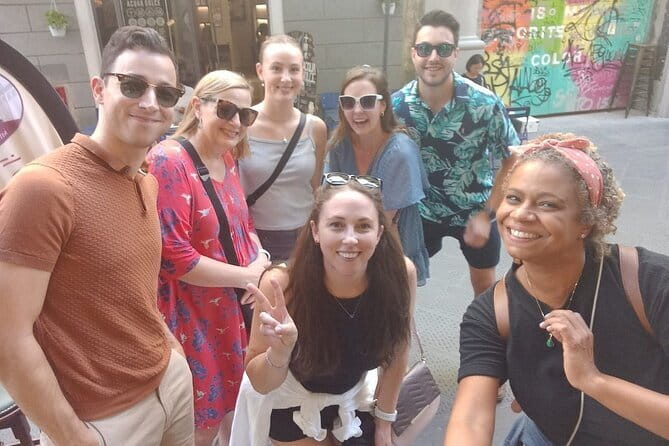
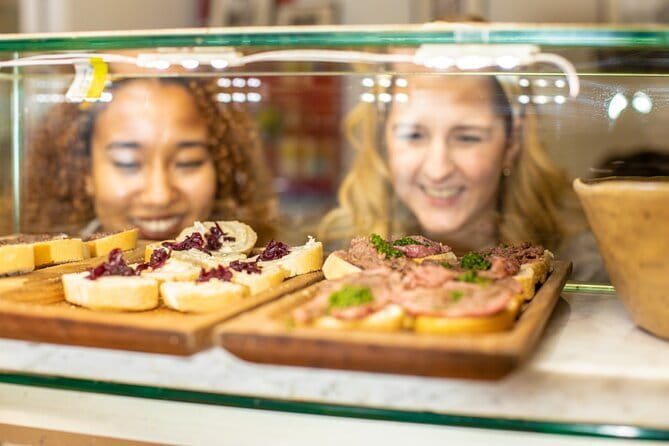
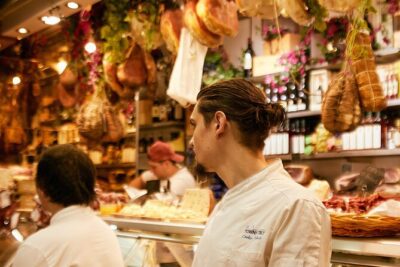
The meeting point is Piazza dell’Unità Italiana, near the historic center’s main sights. From there, you meet the English-speaking food guide and begin on Via Guelfa with a Florentine aperitivo: Tuscan cured meats, local cheeses, and a glass of regional wine.
This is a smart opening course. The salty, savory food gives you a quick introduction to local ingredients, while the wine offers a chance to hear how regional pairings fit into everyday dining. The guide can also use the street and its surroundings to set the scene for Florence’s past and present.
This first stop is a tasting, not a full meal on its own. Pace yourself. There are several courses ahead, and the portions add up faster than they might sound on paper.
More food tours in Florence:
- Cooking Class and Lunch at a Tuscan Farmhouse with Local Market Tour from Florence
★ 5.0 · 4,831 reviews - Florence: Cinque Terre Park Day Trip with Optional Street Food
★ 4.5 · 3,593 reviews - From Florence: Tuscany Wine & Food Tour with Guide
★ 4.9 · 1,746 reviews
Handmade pasta near Palazzo Medici Riccardi
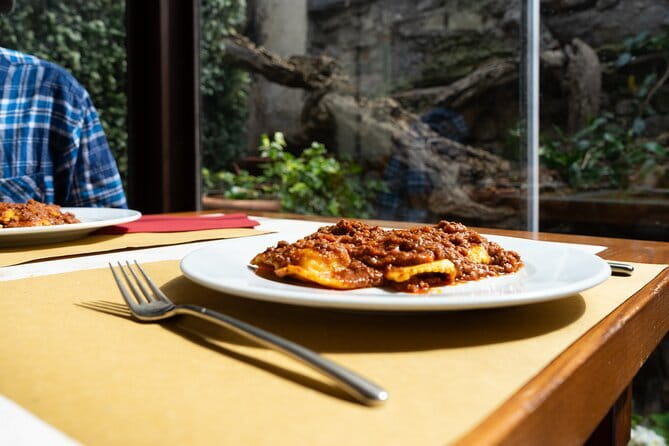
Next comes traditional handmade pici, or another classic Tuscan pasta, at a trattoria near Palazzo Medici Riccardi. Pici are thick, hand-rolled noodles, a hearty style of pasta that suits the region’s straightforward cooking. The exact dish can vary, so you should not count on one specific sauce or recipe.
The setting adds a welcome bit of context. Palazzo Medici Riccardi was once home to one of Florence’s most powerful families, and the nearby streets help make the shift from food stop to city walk feel natural. Guides have been praised for bringing in the city’s political past and everyday customs, not just naming buildings as you pass them.
Here is the main practical warning: pasta can be filling. One person on the tour wished it came later in the meal, and that is fair advice if you tend to fill up quickly. Take a modest first serving if you can, and leave room for the soups and bread to come.
Farmers’ cooking near Piazza Santa Trinita
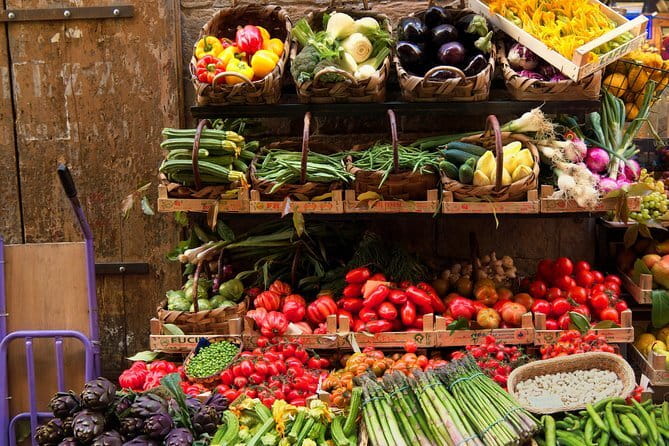
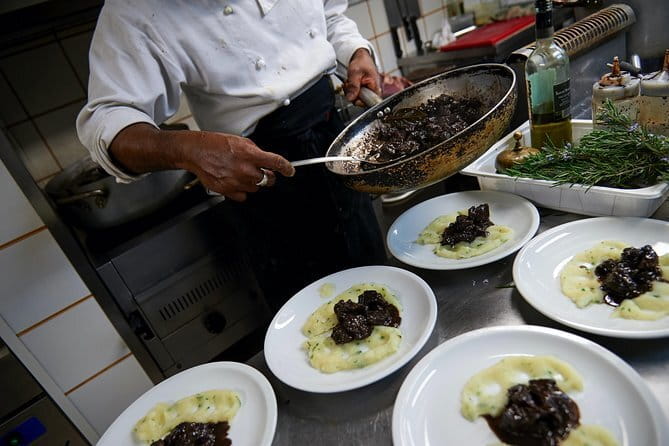
The next stop introduces two classic Tuscan soups, pappa al pomodoro and ribollita. Both grew out of resourceful home cooking. Pappa al pomodoro uses bread and tomatoes; ribollita is a hearty vegetable and bread soup traditionally reheated, giving it its name. They are simple dishes, but they tell you plenty about a cuisine built around making good use of what is at hand.
You’ll taste them at a trattoria near Piazza Santa Trinita, a handsome square framed by Renaissance buildings. The meal here is a useful counterpoint to the pasta: less about a polished first course, more about the sturdy dishes that have fed people for generations. It also gives your guide another chance to explain how local food traditions connect with life beyond restaurant menus.
The two soups may sound like a modest tasting, but they can be substantial after pasta and aperitivo. This is the point to slow down. You’re not being tested on how much you can eat.
Schiacciata on Via dei Neri
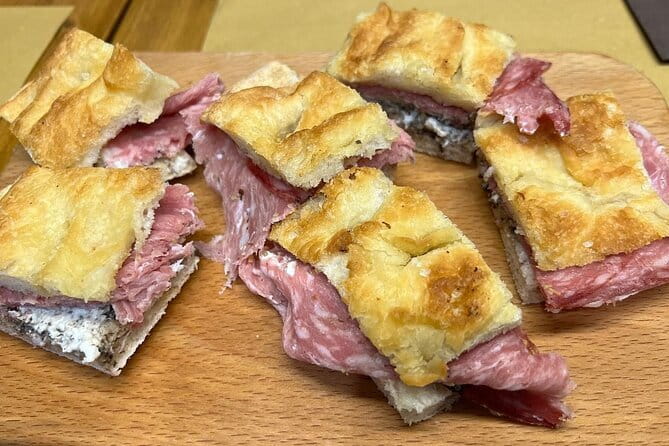
Via dei Neri brings a change of pace. This stop is for schiacciata, a soft Tuscan flatbread similar to focaccia, filled with local ingredients. It’s a classic Florence street-food bite, easy to understand and satisfying without needing a formal table setting.
The street itself is known for its food shops and lively feel, so this stop gives you a glimpse of the city’s casual eating culture. A sandwich here can be a good reference point for later in your stay: you’ll have tried the bread and fillings, and you’ll have a better sense of what to look for when you want a quick lunch.
The drawback is not the food, but your appetite. By now you may have sampled cured meats, cheese, pasta, and soup. If you arrive having eaten lunch, this may feel less like a snack and more like another course. Go hungry, as the tour description wisely advises.
More food and drink experiences in Florence:
- Florence: Chianti Wineries Tour with Wine Tasting
★ 4.5 · 8,301 reviews - Small-Group Wine Tasting Experience in the Tuscan Countryside
★ 5.0 · 7,392 reviews - SMALL-GROUP Wine Safaris: Tuscan Wine Tasting Tours from Florence
★ 5.0 · 5,088 reviews - Winner 2025 Florence Sunset Food & Wine Tour by Eating Europe
★ 5.0 · 5,015 reviews
A sweet finish near Ponte Santa Trinita
The final stop is near Ponte Santa Trinita, where the tour ends with gelato or a traditional pastry-shop treat, depending on the season and availability. The alternatives may include cantucci or another local specialty, so the exact dessert is not guaranteed.
That flexibility is sensible in a food tour. You get a seasonal ending rather than a promise that could be hard to keep year-round. Some guides have taken groups to a gelato shop that became a highlight of the trip, while others may choose a historic pastry shop and a different sweet. Either way, the finish is meant to complete the meal rather than launch a second one.
The tour ends at Piazza di Madonna degli Aldobrandini. That is useful to know if you are planning dinner or an evening walk afterward. Given the quantity of food, you may want to keep the rest of the evening flexible.
The guide matters as much as the menu
The strongest part of this experience is the combination of eating and conversation. Guides such as Gennaro, Marco, Agota, Marie, and Sasha have been praised for explaining the dishes and the city in a relaxed, personable way. Some have brought in Florence’s political history and local customs; others have helped guests get a better sense of the city’s layout and where to eat later.
That makes the tour more than a succession of tastings. A good guide can explain why a dish is traditional, introduce you to the places serving it, and point out details you might miss while walking between stops. One account described a guide translating for a wine-shop owner who did not speak English, a small moment that shows how a food stop can open a door to local conversation.
Still, you are booking a group activity, not a private meal. The guide may speak both English and Italian during the tour. The advertised maximum is 12, which is modest by tour standards but not the same as a group of four or five. The restaurants are not all spacious, and at full capacity seating may feel close. If you strongly prefer room to spread out, keep that in mind.
Is $83.48 good value?
At $83.48 per person, the price is best judged as the cost of a guided meal and a city introduction combined. You get five food stops, enough food to amount to a full meal, water, an English-speaking guide, and at least one alcoholic drink for adults. You are also paying for the guide’s explanations and for the chance to try several local dishes without having to plan a string of restaurant bookings yourself.
The value will depend on your appetite and interest in context. If you want a light tasting or prefer to choose every dish yourself, the price may feel high. If you want to sample a broad range of Tuscan staples and learn where they fit into Florentine life, it is easier to justify. The route also gives you a short list of places and dishes to revisit during the rest of your stay.
The tour is often booked well ahead, with an average lead time of 58 days. If your dates are fixed, planning early is sensible. Free cancellation is available up to 24 hours before the start time; after that, the payment is not refunded. The tour also requires a minimum number of participants, so if it is canceled for not meeting that minimum, you are offered another date or experience, or a full refund.
Who should book this Florence food walk?
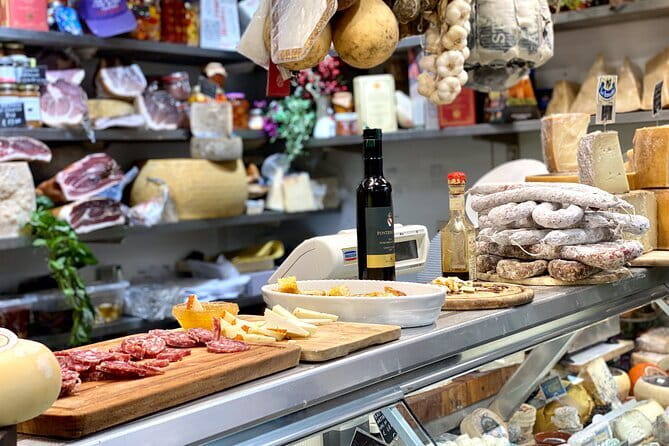
I’d recommend it to you if food is one of your main reasons for visiting Florence, or if you want a practical introduction to Tuscan cooking before choosing restaurants on your own. It suits curious eaters who enjoy a mix of dishes, conversation, and walking through the historic center. Families may find the format manageable: one account praised a guide for being patient with young children, though you should still consider whether a long, food-focused walk fits your family.
It is less suitable if you have severe or life-threatening food allergies. For safety reasons, people with those allergies cannot take part. The tour also calls for a moderate level of physical fitness, and guests must be at least 18 to drink alcohol. Service animals are allowed, and the meeting point is near public transportation.
Should you book it?
Book this tour if you want a hearty, guided introduction to Tuscan food and appreciate hearing the stories behind what is on your plate. The mix of cured meats, pasta, soups, schiacciata, and a seasonal sweet gives you a broad sample, while the city walk makes the meal feel connected to Florence rather than confined to a dining room.
Skip it if you want a small, quiet tasting, have serious food allergies, or prefer a light meal. For everyone else, arrive hungry, take it easy on the pasta, and treat the tour as both lunch or dinner and a useful first lesson in eating well in Florence.
FAQ
How long is the Florence food tour?
The tour lasts about 3 hours and 30 minutes. It includes five food stops and walks through the historic center.
How much food is included?
The tour is described as an itinerant full meal. By the end, you should have eaten the equivalent of a full meal across at least four stops.
What foods might I try?
The route includes Tuscan cured meats and cheese, handmade pici or another traditional pasta, pappa al pomodoro or ribollita, schiacciata, and gelato or a pastry-shop treat such as cantucci.
Are drinks included?
Water and at least one alcoholic drink are included. Alcoholic drinks are only for participants aged 18 and older.
How large is the group?
The maximum group size is 12 people. Some restaurant spaces may feel tight when the group is full.
Can I join if I have a severe food allergy?
No. For safety reasons, people with severe or life-threatening food allergies cannot participate.
More food experiences in Florence
- Small Group Cooking Class & Market Food Tour in Florence
★ 5.0 · 1,574 reviews - Florence: Cinque Terre Day Trip with Optional Street Food
★ 4.5 · 1,315 reviews - Florence: Street Food Tour with Wine & Local Guide
★ 4.9 · 800 reviews - Florence: Street Food Walking Tour with Wine
★ 4.9 · 719 reviews
Fresh reviews from Florence
- Private Tour from Florence: Venice Full Day Tour by Train★ 3.5 · 8 reviews
- Skip the Line: Medici Chapels Ticket in Florence★ 3.5 · 58 reviews
- Private Pisa and Lucca Wine Tour from Florence★ 5.0 · 25 reviews
- From Florence: Explore Venice in a Full Day Tour by Train★ 4.1 · 9 reviews
- From Florence to Venice: A Day Trip to the Floating City★ 4.5 · 90 reviews
- Florence: Pizza-Making and Gelato Experience★ 4.8 · 16 reviews
- Florence: Private Pizza Making Class with Wine Tasting★ 4.3 · 22 reviews
- Florence Premium E-Bike Tour + Photo Shoot and Tastings★ 5.0 · 34 reviews
Florence Food Tours, compared.
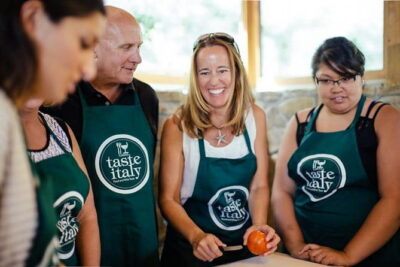
Cooking Class and Lunch at a Tuscan Farmhouse with Local Market Tour from Florence
Read our review →
Cinque Terre Park Day Trip with Optional Street Food
Read our review →
Small Group Cooking Class & Market Food Tour in Florence
Read our review →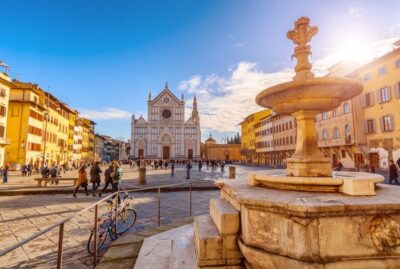
Florence & Pisa Shore Excursion with Food Tasting
Read our review →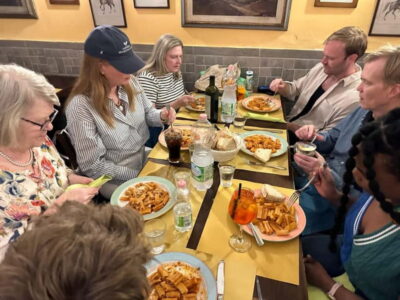
Florence Exclusive PRIVATE Food Tour with 6 or 10 Tastings
Read our review →Browse the lists this tour appears in