
Reviewed · ACCADEMIA GALLERY TOURS
Florence: Accademia Gallery & Statue of David with Uffizi Gallery
Michelangelo’s David is the headline, but the real value here is seeing it in context: first with a guide who can point out the sculpture’s details, then alongside Renaissance works at the Uffizi. I like the priority entry at both museums and the walking route that links major sights such as the Duomo, Ponte Vecchio, and Palazzo Vecchio.
I also like the small-group limit of 15, which gives you a better chance to hear the guide and ask questions than you would in a large crowd. One thing to consider: the tour is tightly focused on highlights, and the description of timing can be confusing. Some accounts of the longer version mention a substantial break, so confirm which schedule you are booking.
Key points to know before you go
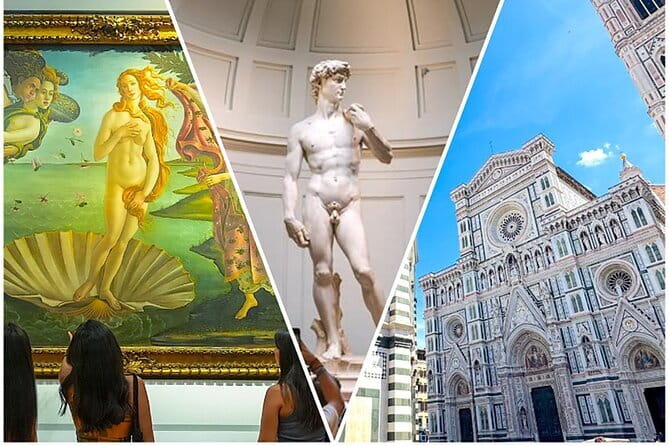
- David gets more than a quick glance: At the Accademia, your guide explains the sculpture’s creation and symbolism, then introduces Michelangelo’s unfinished Prisoners.
- The Uffizi is the longest museum stop: Plan for about 90 minutes of guided time, followed by the option to keep exploring inside.
- The city walk ties the museums together: You pass Florence’s cathedral and historic squares, with landmarks including Ponte Vecchio and the Porcellino Market on the route.
- The group is capped at 15: That is a useful size for hearing explanations and asking questions in crowded galleries.
- The guide shapes the day: Marco, Guido, and Claudia are among the guides praised for clear explanations, humor, and art history insight. Your guide may vary.
- Check the schedule carefully: The stated tour lasts about three and a half hours, but the full-day and half-day timing details do not always read consistently.
Why pair David with the Uffizi
Florence rewards a little preparation. You can walk into a museum and admire famous pictures, but without some context it is easy to move from one nameplate to another and lose the thread. This tour gives you a guide to connect Michelangelo, the Medici, the city’s architecture, and the paintings that made Florence a center of Renaissance art.
The two museums offer different experiences. At the Accademia, the focus is concentrated: Michelangelo’s David is the great draw, and the unfinished Prisoners offer a glimpse of the sculptor’s process. At the Uffizi, the collection ranges across artists and subjects, from Botticelli to Raphael, Caravaggio, and Leonardo da Vinci. A guide can help you notice what makes a work important without expecting you to arrive with an art-history degree.
The guided portion is not meant to cover every room. Think of it as a well-chosen introduction, not an exhaustive museum visit. That distinction matters. Some people want a clear route through the essential works; others prefer to wander on their own. This tour is best for the first group, especially if you are visiting Florence for a short time.
More Uffizi visits in Florence:
- Florence: Skip-The-Line Uffizi Gallery Timed Entry Ticket
★ 4.5 · 27,832 reviews - Florence: Uffizi Priority Ticket & Masterpieces Audio App
★ 4.2 · 6,402 reviews - Florence: Skip-the-Line Uffizi Small Group Tour
★ 4.6 · 5,926 reviews
At the Accademia, David is only the beginning
The tour starts at Piazza della Santissima Annunziata and enters the Galleria dell’Accademia with priority admission. The scheduled visit is about 30 minutes, so expect a focused look rather than a leisurely tour of every room.
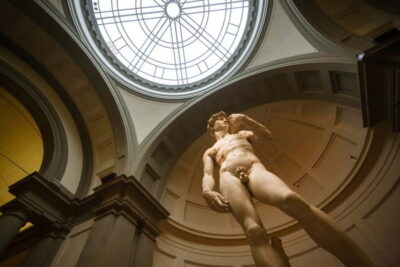
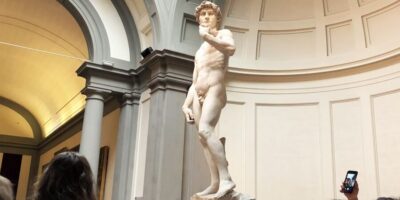
David is a striking work even if you have seen countless photographs. The guide explains the story behind its creation and points out details that can be missed when you are simply trying to take in the figure and the crowd around it. The sculpture’s size and presence are part of the impact, but its meaning and the choices Michelangelo made are what give the visit more substance.
The unfinished Prisoners are another useful stop. These figures appear to emerge from the stone, making them a vivid way to discuss Michelangelo’s methods and ideas about sculpture. A guide can show you how to look at the incomplete forms rather than treating them as lesser works on the way to David.
Here is the trade-off: 30 minutes goes quickly. One unhappy account describes a guide spending a long time on Michelangelo and leaving little room for the rest of the Accademia. That is a reminder to ask early if you want time for other rooms. The stated format is a guided highlight visit, not open-ended time to explore the museum at your own pace. One account also describes being unable to return after leaving, so do not assume you can re-enter on the same ticket.
The walk puts Florence’s art in its streets
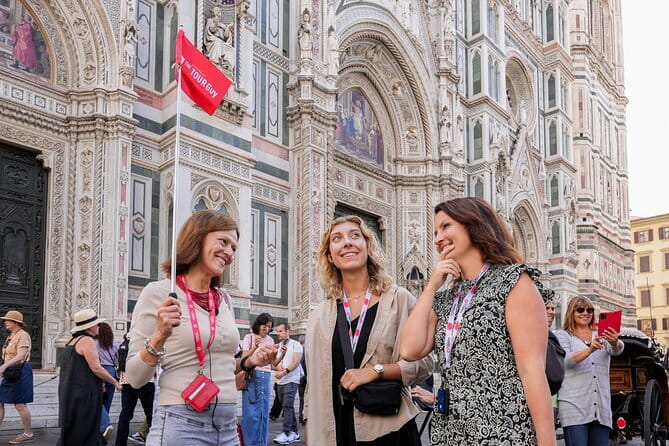
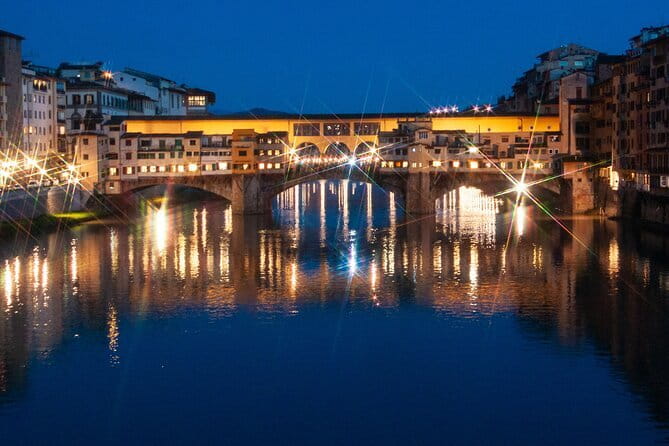
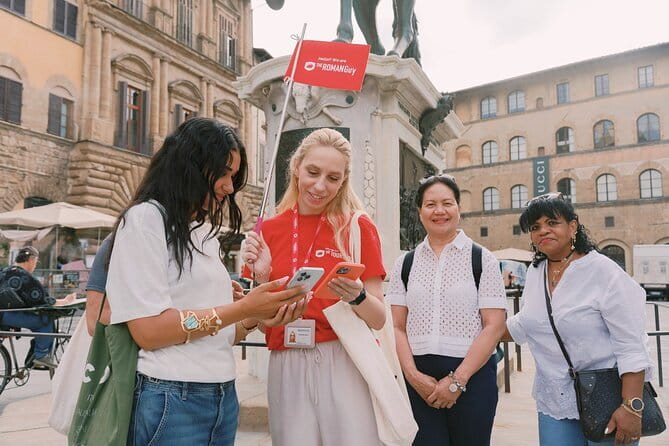
Between the museums, you get a guided walk through the historic center. The route includes views of the cathedral and Brunelleschi’s vast terracotta dome, along with the city squares and landmarks associated with Florence’s political and commercial life. The walk also passes sights such as Ponte Vecchio and the Porcellino Market.
At the cathedral, the guide explains how the dome became a defining feature of the skyline and a symbol of Florence’s wealth and ambition. This is an exterior stop, not a visit inside the Duomo. If you are hoping to tour the cathedral’s interior, arrange that separately.
Piazza della Signoria offers a different kind of history. Palazzo Vecchio still dominates the square, where outdoor sculpture and cafés sit amid the setting for centuries of political life. The guide links the piazza to the Medici and the power struggles that shaped the city. This is where Florence feels less like a collection of famous artworks and more like a place where art, government, and wealth were closely connected.
The walking is described as mild, though you should be comfortable spending several hours on your feet. Some stairs at the Uffizi may add effort. Wear shoes you can walk in, and keep in mind that the route is an overview: you will see important places from the outside rather than stop for a full visit at each one.
The Uffizi turns a short visit into an art lesson
The Uffizi is the main event after David, with roughly 90 minutes of guided time. Priority entry helps reduce the time spent waiting to get in, though it cannot remove the crowds inside or guarantee that every room will be quiet.
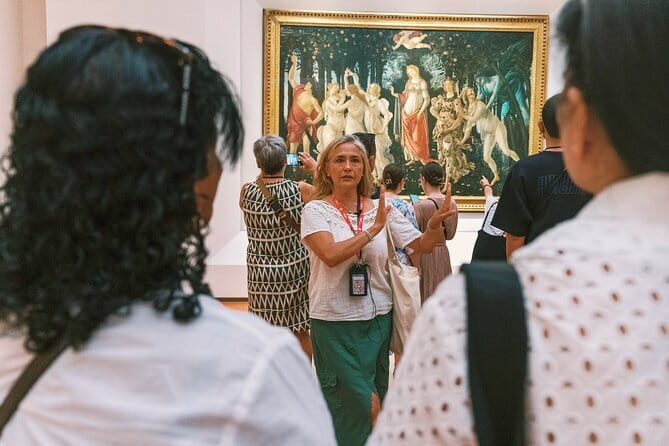
Botticelli’s Birth of Venus and Primavera are among the key works on the route. Your guide also introduces paintings by Raphael, Caravaggio, and Leonardo da Vinci, using them to explain how Florence became a major center of Renaissance art. The benefit is not just hearing famous names. A good explanation helps you notice how artists handled subjects, composition, and meaning, and how one period’s ideas led into another.
Past guides named Marco and Guido have been praised for making the subject engaging and clear, while Claudia has been noted for sharing her knowledge of Florence’s art and architecture in a personable way. These are examples of the guiding style the tour can offer, not a promise that you will have a particular guide. The strongest feedback centers on guides who make art feel connected to the people and politics of the time, often with humor and a clear point of view.
Expect a selective route. The Uffizi is too large to cover fully in an hour and a half, and the guide will focus on chosen rooms and works. Some people find detailed explanations absorbing; others may feel ready to explore independently by the afternoon. Once the guided section ends, you are free to stay inside and continue through the galleries at your own pace. That extra time is a real plus, especially if you want to revisit a work or browse rooms the guide did not cover.
More Accademia and David visits in Florence:
- Florence: Timed Entrance Ticket to Michelangelo’s David
★ 4.6 · 16,983 reviews - Florence: Michelangelo’s David Skip-the-Line Entry Ticket
★ 4.5 · 12,764 reviews - Florence: Michelangelo’s David Priority Ticket & Audio App
★ 4.4 · 6,812 reviews - Florence Accademia Gallery Tour with Entrance Ticket Included
★ 4.5 · 6,148 reviews
The pace, price, and timing deserve a close look
At $46.45 per person, the tour bundles guided visits to two major museums, priority entry, and a central Florence walking route. The price makes most sense if you value a guide who can interpret the art and help you navigate a short visit. If you already know the collections well and prefer to move at your own pace, separate museum visits may suit you better.
A group limit of 15 is a practical advantage. It is small enough to feel more personal than a large coach tour, while still being a group rather than a private guide. Bring your questions, but be ready to listen closely: the galleries can be crowded, and a quiet explanation may be hard to catch if you fall behind.
Timing needs attention. The experience is listed at about three and a half hours, and the half-day schedule specifies 30 minutes at the Accademia and 90 minutes at the Uffizi. Other timing notes refer to a full-day version, and some accounts describe a long lunch break between sessions. Confirm the exact schedule for your chosen departure instead of assuming the tour will run as one continuous block.
The meeting point is Piazza della Santissima Annunziata. The tour ends inside the Uffizi Galleries, which is convenient if you want to stay and explore, but it means you should not expect a return to the starting point with the group. Hotel pickup, food, and drinks are not included. The tour is offered in English, and each person needs a valid passport or ID matching the name used at booking for Uffizi entry. Provide every participant’s full name when you book.
Who will get the most from this tour

I would choose this tour if it is your first Florence visit, you want to see both David and the Uffizi, and you enjoy hearing the story behind the art. It is also a good fit if you have limited time and want the city walk to connect the museum visits rather than treating them as separate appointments.
Art lovers who enjoy detailed explanations are likely to appreciate the guide-led format. The strongest experiences come when the guide links a sculpture or painting to the wider history of Florence, as guides such as Marco and Guido have been praised for doing. If you prefer minimal commentary, or want to spend an hour with every room that catches your eye, a self-guided visit may be more comfortable.
The tour has a strong overall rating of 4.6 out of 5, and 90 percent of participants recommend it. Still, the less favorable experiences point to real considerations: a guide change can disrupt the start, a rushed pace can limit museum time, and an in-depth art talk can feel like too much if you want a lighter overview. The best way to set yourself up for success is to arrive on time, check the schedule, and be clear about what kind of visit you want.
Should you book the Florence art tour?
Book it if you want an expert-led introduction to David and the Uffizi, plus a walk through central Florence that explains the city’s landmarks and history. Priority entry and a group capped at 15 add practical value, while the chance to remain in the Uffizi afterward gives you room to explore beyond the guided route.
Skip it if your main goal is long, unstructured time in both museums, or if you are not in the mood for detailed art commentary. Before booking, confirm whether your departure is the half-day or full-day format and check the expected break. With those details clear, this is a useful way to connect Florence’s most famous sculpture, paintings, and streets in one visit.
FAQ

How long does the tour last?
The tour is listed as approximately three and a half hours. Timing details also refer to full-day and half-day versions, so confirm the schedule for your selected departure.
How much time is spent at each museum?
The half-day schedule specifies about 30 minutes at the Accademia and 90 minutes at the Uffizi. You can stay inside the Uffizi after the guided portion.
Does the tour go inside the Duomo?
No. The route includes an explanation of Florence’s cathedral and its dome from outside. Entry to the Duomo interior is not included in the stated tour.
Where does the tour start and end?
It starts at Piazza della Santissima Annunziata and ends inside the Uffizi Galleries.
What is included in the price?
The listed inclusions are priority entry and guided visits to the Accademia and Uffizi, a walking tour of Florence’s historic center, and an English-speaking guide. The group is limited to 15.
What identification do I need?
Each person must bring a valid passport or ID that matches the name provided at booking for entry to the Uffizi. Provide the full names of everyone in your party when booking.
More museum visits in Florence
- Florence: Leonardo Interactive Museum Entry Ticket
★ 4.5 · 11,763 reviews - Uffizi Gallery Small Group Tour with Guide
★ 4.5 · 4,923 reviews - Florence: Accademia Gallery Guided Tour
★ 4.6 · 4,156 reviews - Florence: Accademia Gallery Guided Tour with Entry Ticket
★ 4.6 · 2,253 reviews
Fresh reviews from Florence
- From Florence: Explore Venice in a Full Day Tour by Train★ 4.1 · 9 reviews
- From Florence to Venice: A Day Trip to the Floating City★ 4.5 · 90 reviews
- Private Tour from Florence: Venice Full Day Tour by Train★ 3.5 · 8 reviews
- Skip the Line: Medici Chapels Ticket in Florence★ 3.5 · 58 reviews
- Private Pisa and Lucca Wine Tour from Florence★ 5.0 · 25 reviews
- Private Coffee and Sweets Tour Caffé, Chocolate, Gelato & More★ 5.0 · 20 reviews
- Florence Airport Private Departure Transfer★ 4.5 · 80 reviews
- Private Transfer from your Hotel in Florence to the Airport★ 4.5 · 63 reviews
Accademia Gallery Tours, compared.
Timed Entrance Ticket to Michelangelo’s David
Read our review →
Michelangelo’s David Skip-the-Line Entry Ticket
Read our review →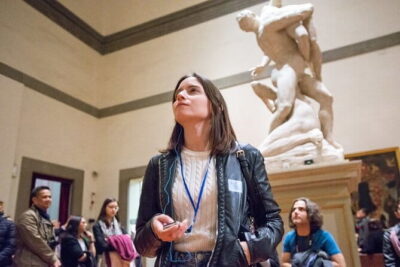
Florence Accademia Gallery Tour with Entrance Ticket Included
Read our review →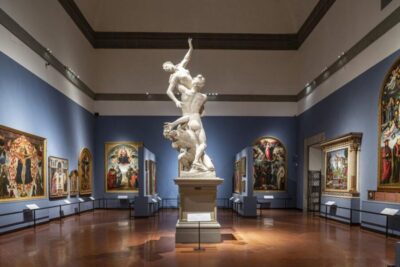
Timed Entry Ticket to Michelangelo’s David & eBook
Read our review →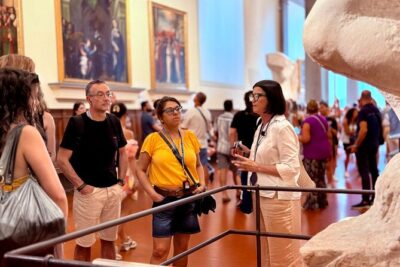
Skip the line: Uffizi and Accademia Small Group Walking Tour
Read our review →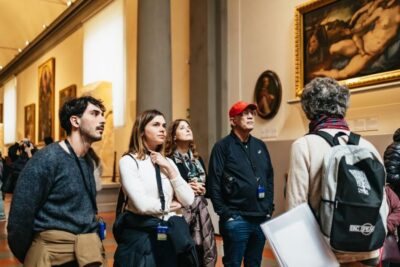

Accademia Gallery Guided Tour with Entry Ticket
Read our review →Browse the lists this tour appears in